As you look for lift kits and truck accessories in Reading, first decide whether a leveling option or full suspension lift is right for you. A leveling upgrade corrects factory rake and maintains daily handling, while a suspension lift provides clearance, wheel travel, and larger tire fitment. Make sure you have exact year, trim, drivetrain, and suspension details to verify Rough Country compatibility. Plan your spending for tires, alignment, and accessories including steps, lights, or liners—you'll see how the right setup comes together.
Essential Information
- Pick a leveling upgrade to remove factory rake while keeping near-stock handling and accommodating bigger tires for daily driving.
- Select a suspension lift kit to achieve more clearance, suspension movement, and off-road performance, understanding that steering and handling will change.
- Confirm exact fitment by checking your truck's year, model, make, drivetrain, trim, cab, bed, and suspension setup before ordering Rough Country products.
- Match lift height and shock absorbers to your use, whether commuting, trail driving, towing, or heavy off-road use.
- Reserve budget for more than the kit cost itself, with costs for alignment, labor, wheels, tires, shocks, and extra accessories like steps, lights, and liners.
Suspension Lifts versus Leveling Kits
Since both upgrades change your truck's stance, leveling kits and suspension lift kits address different issues and deliver varied outcomes. A leveling upgrade generally raises the front to correspond with the rear, addressing factory rake with little change to geometry, ride height, and drivability. You use one if you want a cleaner profile and space for slightly larger tires.
A suspension lift elevates the whole truck and changes key components to create more ground clearance and suspension travel. You'll notice bigger gains in ride height, off-road capability, and tire fitment, but you should anticipate handling changes, steering modifications, and a higher center of gravity. If you prefer subtle visual enhancement, level it. When you need genuine clearance and articulation, apply a suspension lift and build the supporting modifications tailored to your application.
Determine which Rough Country lift kit fits your truck.
Start by gathering your truck's year, make, and model, transmission type, and your intended application, since Rough Country engineers lift kits based on precise geometric specifications and performance targets. This information helps you identify which brackets, struts, spacers, crossmembers, and hardware will fit without clearance or alignment issues.
Subsequently, examine factory ride height, cabin and bed configuration, axle setup, and whether your truck uses 2WD, 4WD, or adaptive suspension. Rough Country compatibility guides make this easy, yet you should confirm model compatibility against trim-specific components and OEM package differences. A kit designed for a Silverado 1500 won't fit a Trail Boss, and a Ram equipped with air suspension requires different modifications than a coil-spring truck. By confirming compatibility first, you prevent install surprises, component conflicts, and return hassles.
Determine which Rough Country lift kit suits your how you drive.
Match the kit to your driving style, and you'll get better ride quality, longevity, and tire clearance without purchasing unnecessary capability. When your truck mainly commutes, select a light leveling kit from Rough Country or a 2 to 3.5 inch lift kit calibrated for daily comfort and stable steering response.
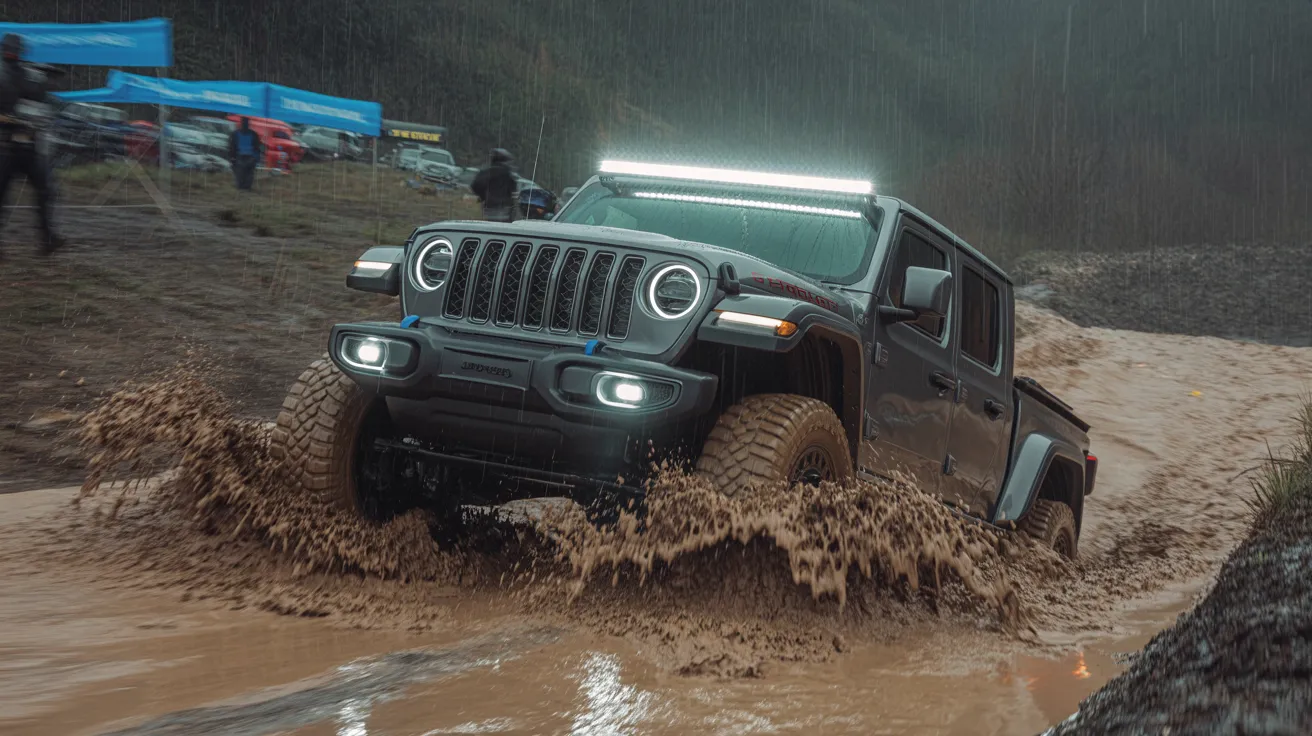
When you alternate between pavement and trails, step up to a lifted suspension featuring improved shocks and corrected control arm angles. You'll experience better trail handling, better articulation, and room for larger tires without overstressing original components. For heavier trail use, prioritize raised struts, N3 or Vertex dampers, and suspension systems that preserve driveline geometry under load. A quality Rough Country package should match load, speed, terrain, and how firm a ride you can accept.
Best Rough Country Truck Accessories
Finish your lifted truck by adding Rough Country add-ons that tackle the real weak points you'll see once you lift it and add bigger tires. Focus on upgraded entry steps or skid plates, which recover vehicle access and add undercarriage protection now that your truck sits higher and broader.
Next, focus on sight lines and handling. Rough Country light bars improve usable vision on dark trails, job sites, and rural roads without hard-to-manage integration. Cabin protection and cargo liners protect the interior from dirt, rocks, and moisture you'll bring in from trails. Fender flares help contain tire spray and enhance the broader stance provided by larger rubber. For towing or pulling, heavy-duty hitches, recovery hooks, and winch-capable bumpers add capability without compromising fitment. Go with products that align with your lifted truck's dimensions and workload.
How Much Should You Budget for Your Build?
After selecting the suspension lift and supporting accessories, set aside a budget above the base price. You'll need funding for shock units, wheels, tires, alignment, labor, and any drivetrain or steering corrections your platform demands. Maker reputation counts; quality kits usually offer tighter tolerances, smoother rides, and fewer install headaches.
In terms of realistic budget ranges, assume entry-level spacer or leveling systems to start lower, while full suspension systems with control arms, tuned dampers, and larger tires climb quickly. Installation complexity, service fees, and calibration work may contribute significantly. You must also budget supporting upgrades like gear changes, brake components, and recovery gear if you're building for trail use. When finances are limited, weigh loan options cautiously and prioritize reliability instead of fancy additions.
Frequently Asked Questions
Do Lift Kits Impact Factory Warranty?
Yes, suspension kits can affect your original warranty, but they don't automatically void it. You encounter warranty issues if a dealer proves the lift kit caused or contributed to a malfunction. Powertrain, steering, suspension, and drivetrain claims often trigger dealer disputes. You ought to maintain installation records, choose quality parts, and follow service intervals. That helps you contest rejected claims and maintain protection where the modification didn't cause the problem.
Do Larger Tires Require Re-Gearing My Truck?
Yes—if you leap multiple tire sizes, you'll often require re-gearing. For instance, when switching from 31s to 35s, your vehicle can feel sluggish, hunt for gears, and put strain on the drivetrain under load. Re-gearing reestablishes optimized gear ratios, helping you restore acceleration, towing power, and transmission response. You might not need regearing for a minor upsizing, however, if power, fuel economy, or shift quality drop, it's typically the best option.
How Frequently Should You Inspect Lift Parts?
You should inspect suspension components following the initial 500 miles, next during each oil change or every 3,000 to 5,000 miles, depending data on use. Regular checks help you identify bushing wear, shock leaks, bracket damage, and alignment issues early. Verify bolt tightness following aggressive off-road driving, hauling, or collisions. If you drive in mud, salt, or rough terrain often, shorten intervals and check steering and suspension parts at shorter intervals.
Does a suspension kit impact towing or payload capacity?
Yes, a suspension lift can alter your truck's towing and payload limits. When you increase ground clearance for more ground clearance, you shift suspension alignment, center of gravity, and force distribution on parts. That can reduce stability when loaded and add drivetrain strain, especially with larger tires. You should follow your factory specifications unless an engineered kit explicitly states revised capacities. Correct alignment, transmission ratios, and brake performance matter too.
Are Alignment Services Needed Once You Install vehicle modifications?
Yes—if components modify ride height, suspension geometry, steering geometry, or tire width, you should get an alignment. You'll notice the impact fast: slight changes can pull your truck off-center, damage tread rapidly, and worsen handling characteristics. A full alignment brings back camber setting, caster, and toe to standard. After certain installs, you may also need brake calibration for driver aid precision. You safeguard tire life, steering sharpness, and real-world safety by checking alignment immediately.
Wrap-Up
Choosing the right lift configuration and products relies on how you use your truck, your preferred stance, and what your budget can handle. When you match a Rough Country suspension within your driving approach, you'll experience durability, space, and aesthetics that integrate seamlessly like a well-tuned drivetrain. Add wise upgrades, structure your spending carefully, and you'll build a rig that's suitable for highways, capable off it, and ready for whatever job comes next.